

Contrary to common skepticism, the perceived fragility and high repair costs of aluminum work trucks are largely myths; the real story is one of superior lifecycle profitability when analyzed correctly.
- Modular panel design often makes repairs faster and more contained than with steel, keeping insurance rates stable.
- Engineered solutions like coatings and insulation effectively prevent galvanic corrosion, the primary concern for dissimilar metals.
Recommendation: Business owners should evaluate aluminum bodies not on sticker price, but on a comprehensive Total Cost of Ownership (TCO) model that includes payload gains, fuel efficiency, and reduced powertrain wear.
For any construction business owner, the move by manufacturers like Ford to high-strength, military-grade aluminum bodies for workhorses like the F-150 was met with a healthy dose of skepticism. The immediate concerns are valid and practical: Is it strong enough for a job site? What happens to repair costs and downtime? Is this lightweight material truly built for heavy-duty work, or is it a compromise that will hurt the bottom line?
The common discourse often gets stuck on simple binaries: steel is strong, aluminum is weak; aluminum doesn’t rust, but it’s expensive to fix. This surface-level analysis misses the crucial point for a business owner. The decision isn’t about choosing a metal; it’s about choosing a long-term business asset. The true evaluation requires a shift in perspective—from that of a traditional truck buyer to that of a materials scientist and a chief financial officer combined.
This article moves beyond the myths. We will dissect the engineering behind modern aluminum bodies, focusing on what matters for a commercial fleet: the science of its repairability, the specific nature of its corrosion and how to prevent it, and the cascading financial benefits that extend far beyond the gas pump. We’ll provide a framework to analyze durability not as a simple question of dent resistance, but as a complex equation of payload, longevity, and total cost of ownership.
This in-depth analysis will equip you with the critical knowledge needed to assess whether an aluminum-bodied truck is a durable, profitable tool for your business. The following sections break down each key factor, from repair realities to long-term engine reliability, providing a complete picture for your next fleet decision.
Summary: Assessing Aluminum Work Truck Durability and Value
Understanding Aluminum Repair Costs
The primary fear surrounding aluminum bodies is the specter of exorbitant repair bills and specialized, hard-to-find body shops. While it’s true that working with aluminum requires different tools and training than steel, the economic reality is far more nuanced. The key isn’t the material itself, but the modular repair philosophy adopted by manufacturers. Instead of massive, complex repairs, modern aluminum trucks are often designed for panel replacement. This “plug and play” approach means a damaged door or fender can be swapped out efficiently, often reducing labor hours and containing the repair to a specific area.
This design foresight has had a stabilizing effect on the real-world cost of ownership. Contrary to widespread assumptions, major insurers have not significantly increased premiums for aluminum-bodied trucks. In a detailed analysis of the aluminum Ford F-150, it was found that repairability costs were in line with expectations from previous steel models. This is because the engineering focus on swappable body panels directly mitigates the higher hourly labor rate for aluminum work. While some shops may charge more per hour, the job can take less time, balancing the final invoice.
Furthermore, industry data provides a clearer picture of labor rates. It’s not a financial free-for-all; a recent survey revealed that the majority of shops perform this specialized work within a predictable cost bracket. This evidence suggests that while the repair *process* is different, the financial impact has been largely neutralized by smart design and a maturing repair industry. For a business owner, this means downtime and cost are more predictable and manageable than the myths suggest.
The Galvanic Contamination Mistake
While aluminum’s natural resistance to rust (oxidation) is a major advantage over steel, it is susceptible to a different, often misunderstood, phenomenon: galvanic corrosion. This electrochemical reaction occurs when two dissimilar metals (like an aluminum body and a steel frame or fasteners) are in contact in the presence of an electrolyte, such as road salt dissolved in water. Without proper mitigation, the aluminum (the more “anodic” metal) will corrode at an accelerated rate, sacrificing itself to protect the steel.
Ignoring this principle is a critical mistake. Simply bolting steel accessories to an aluminum bed without proper insulation is an invitation for long-term structural damage. However, automotive engineers have designed sophisticated solutions to prevent this. The primary strategies involve:
- Isolation: Using non-absorbent insulators like rubber or plastic gaskets and specialized washers to create a physical barrier between the aluminum and steel components.
- Coatings: Applying advanced, corrosion-resistant primers and coatings to both metal surfaces before they are joined, creating a durable, non-conductive layer.
This microscopic attention to detail is what ensures the long-term integrity of the vehicle. The junction between different materials is no longer a weak point but a highly engineered interface.

As the image above illustrates, the solution lies in creating deliberate separation at the material interface. For a business owner, this means trusting the factory engineering but also ensuring that any aftermarket upfitting follows these same strict protocols to avoid compromising the vehicle’s built-in protections. Regular washing, especially in high-salt regions, is also crucial to remove the electrolytes that enable the reaction.
Action Plan: Auditing Galvanic Corrosion Vulnerabilities
- Points of Contact: List all points where dissimilar metals meet on the truck body (e.g., steel bolts, toolboxes, frame attachments).
- Collecte: Inventory the existing protective measures at these points (e.g., check for visible gaskets, specialized coatings, non-metallic washers).
- Coherence: Confront existing aftermarket additions with manufacturer guidelines. Are they isolated correctly or bolted directly metal-to-metal?
- Mémorabilité/émotion: Identify high-risk areas prone to salt spray and moisture collection (e.g., wheel wells, underbody) versus low-risk areas.
- Plan d’intégration: Create a priority list to either correct improper aftermarket installations or add protective measures where they are missing.
Optimizing Truck Bed Protection
A work truck’s value is intrinsically tied to its durability, and nowhere is that tested more than in the truck bed. While steel is known for its high resistance to surface impact (dent resistance), aluminum’s advantage lies in its long-term resilience against the elements, which directly translates to a longer operational lifespan. The key to maximizing this lifespan is understanding how to protect it from the specific abuses of a job site.
Aluminum does not develop perforating rust like steel, which is a leading cause of body degradation over time. This inherent resistance is a fundamental asset, particularly in wet or humid climates. However, it is a softer metal and more prone to gouges and deep scratches from heavy, sharp materials. An unprotected aluminum bed can quickly show signs of hard use. Therefore, a high-quality bed liner is not an option—it’s a mandatory investment. A spray-in or heavy-duty drop-in liner acts as the primary defense, absorbing impacts and preventing the direct contact that leads to cosmetic and minor structural damage.
This combination of aluminum’s inherent corrosion resistance with a robust protective layer creates a vehicle with a significantly longer potential service life. The focus shifts from fighting inevitable rust to simply protecting against mechanical damage.
A direct comparison shows the long-term benefit of this material choice, especially when properly maintained.
| Material Type | Average Lifespan | Key Advantage |
|---|---|---|
| Aluminum Body | 15-25 years | Natural corrosion resistance |
| Steel Body | 10-15 years | Higher impact resistance |
| Aluminum (Well-Maintained) | 25+ years | Minimal rust issues |
Comparing Weight and Payload
The most celebrated advantage of aluminum is its significant weight reduction. An aluminum body can be up to 40% lighter than its steel equivalent without compromising structural strength. For a business, this isn’t just an engineering statistic; it’s a direct and powerful lever for improving profitability. Every pound saved on the vehicle’s curb weight is a pound that can be legally and safely added to its payload. This transformation of dead weight into revenue-generating capacity is the core financial argument for aluminum.
For a construction business, this means the ability to haul more materials, heavier equipment, or an extra crew member in a single trip. The impact on operational efficiency can be profound. In some applications, like dump bodies, the move to aluminum can have a dramatic effect. East Manufacturing, a leader in the field, reports that aluminum dump bodies can provide up to 2,000 additional pounds of payload compared to steel counterparts. This could mean fewer trips to the quarry, faster job completion, and lower fuel consumption per ton of material moved. The truck becomes a more productive asset on every run.
This increased capacity is a direct result of aluminum’s superior strength-to-weight ratio. While a sheet of steel may be more resistant to a small dent, the overall engineered structure of an aluminum body is designed to handle the same, if not greater, total loads. This allows for a lighter frame and chassis components, all contributing to the payload advantage.
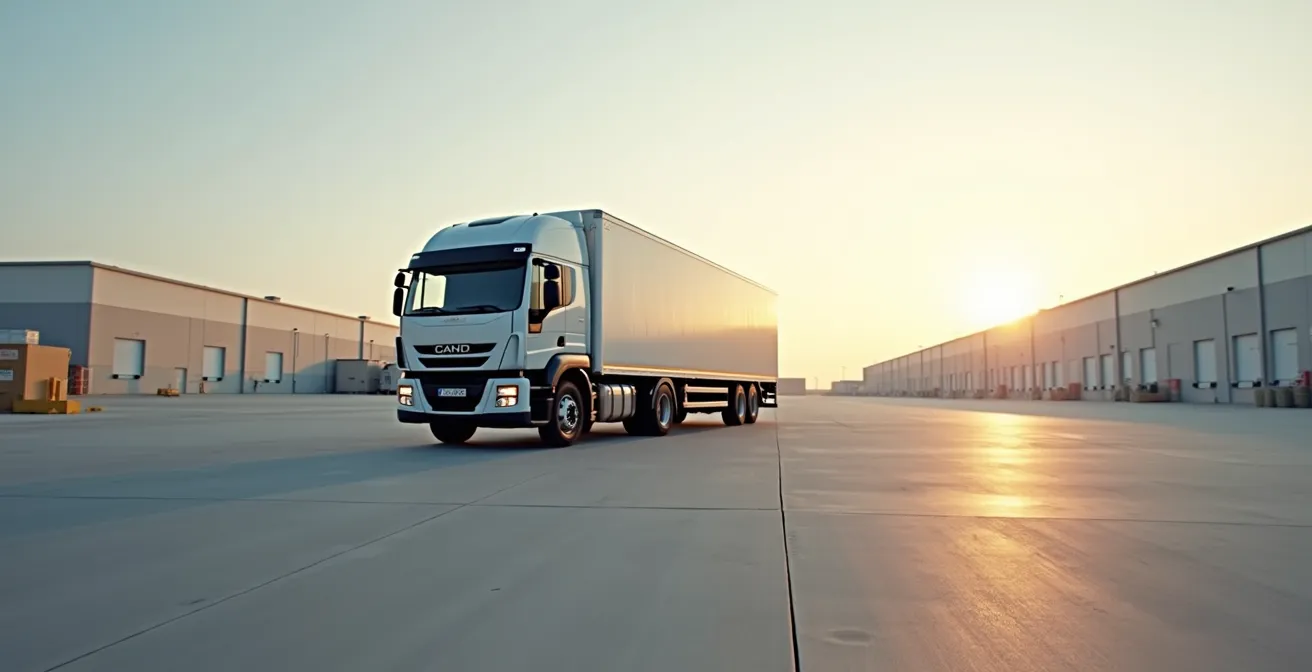
Ultimately, the weight savings create a virtuous cycle: higher payload increases revenue potential, while the lower overall mass reduces fuel consumption and wear on components like tires and suspension, further lowering operational costs. It’s a fundamental shift in how the vehicle generates value.
Planning the Purchase by Region
A truck’s durability is not an absolute; it’s heavily influenced by its operating environment. When deciding between aluminum and steel, regional climate and road treatment policies are critical factors that can dramatically affect long-term maintenance costs and vehicle lifespan. A strategy that works in a dry, arid climate like Arizona may be suboptimal in the salt-belt states of the Northeast or coastal regions with salt-laden air.
In high-salt environments, steel bodies are in a constant battle against rust. Even with modern coatings, a single deep scratch or stone chip can expose the metal and become a starting point for corrosion that spreads under the paint. This requires vigilant maintenance and regular, costly rust-proofing treatments to preserve the vehicle’s integrity and resale value. Aluminum, by contrast, is largely immune to this type of degradation, making it an inherently more durable choice for these corrosive regions. The threat shifts from rust to the more manageable issue of galvanic corrosion, as previously discussed.
Fleet maintenance costs reflect these environmental challenges. The American Transportation Research Institute’s (ATRI) latest data provides a crucial benchmark; the average repair and maintenance cost for fleets is $0.202 per mile. In salt-belt states, a significant portion of this cost for steel-bodied trucks can be attributed to corrosion-related issues. Choosing aluminum can directly reduce this expenditure over the vehicle’s life. Conversely, in a dry region with minimal road salt, the primary corrosion advantage of aluminum is less pronounced, potentially shifting the TCO calculation slightly.
Calculating the Diesel Break-Even Point
While this section title mentions diesel, the financial logic applies to any powertrain. Calculating the break-even point for the higher upfront cost of an aluminum body is a crucial step for any skeptical business owner. It transforms the purchase from an emotional decision into a data-driven one. This isn’t just about fuel savings; it’s a comprehensive Return on Investment (ROI) calculation that must include multiple factors to be accurate.
The first step is to quantify the fuel economy improvement. The lighter weight of the vehicle directly reduces the energy required to move it. The exact savings per 100 pounds of weight reduction will vary by vehicle and driving cycle (city vs. highway), but it’s a measurable figure. This gain must then be multiplied by your fleet’s average annual mileage and the current cost of fuel to get a baseline annual saving.
Second, you must factor in the reduced wear on consumables. A lighter truck puts less stress on tires, brakes, and suspension components. While harder to quantify precisely without detailed fleet data, this leads to longer intervals between replacements and lower maintenance bills over the life of the truck. These are real, tangible savings that must be included in the calculation. Finally, the increased payload capacity, as discussed earlier, has an ROI of its own through increased productivity and revenue, which should also be estimated and included.
Once you have a total annual savings figure (fuel + maintenance + productivity gains), you can compare it against the initial price premium for the aluminum body. Dividing the premium by the annual savings will give you the break-even point in years. For many high-mileage commercial fleets, this timeframe is often surprisingly short, turning the aluminum body into a profit center for the remainder of its service life.
Optimizing the Truck Body Budget
Budgeting for a work truck goes far beyond the initial purchase price. A savvy business owner focuses on the Total Cost of Ownership (TCO), which encompasses the initial outlay, operational costs (fuel, maintenance), and critically, the vehicle’s resale value at the end of its service life. When viewed through this lens, the higher sticker price of an aluminum body often reveals itself to be a strategic investment rather than a mere expense.
The initial purchase price for an aluminum body can be up to 30% higher than a comparable steel one. This is the figure that causes most buyers to hesitate. However, this single data point is misleading without its counterparts. Over a typical 5-year service life for a commercial vehicle, the fuel savings alone can be substantial. More importantly, the avoidance of corrosion-related maintenance and repairs, which are a recurring cost for steel bodies in many climates, adds up significantly. The average cost of a repair is not trivial, and avoiding even one major rust-related body repair saves thousands.
The final, and perhaps most overlooked, piece of the TCO puzzle is resale value. A steel-bodied truck after years of service in a tough climate will inevitably show signs of rust, which severely depreciates its value. An aluminum truck, being free of such cosmetic and structural rust, retains a significantly higher percentage of its initial value. This higher residual value at trade-in or sale directly reduces the total cost of ownership, effectively refunding a large portion of the initial price premium.
This holistic view of cost across the vehicle’s lifecycle is essential for an optimized budget.
| Cost Factor | Aluminum | Steel |
|---|---|---|
| Initial Purchase | ~30% higher | Baseline |
| Fuel Savings (5 years) | Significant | $0 |
| Corrosion Maintenance | Minimal | Regular treatment needed |
| Resale Value | Higher retention | Depreciation from rust |
Key Takeaways
- Aluminum’s value is in Total Cost of Ownership (TCO), not just the purchase price.
- Modern aluminum bodies are designed for modular repair, controlling costs and downtime.
- The primary risk, galvanic corrosion, is effectively managed with factory-installed isolation and coatings.
Ensuring Long-Term Reliability of Downsized Turbo Engines
The shift to aluminum bodies is not an isolated trend; it’s deeply connected to the evolution of modern powertrains, specifically the rise of smaller, turbocharged engines. To meet efficiency and emissions standards, manufacturers are replacing large, naturally-aspirated V8s with more compact, powerful, and complex turbocharged V6s or even four-cylinder engines. The lighter aluminum body is a critical enabler of this strategy, and it has a profound positive impact on the long-term reliability of these advanced engines.
A downsized turbo engine works harder, operating under higher pressures and temperatures to produce its impressive power figures. Placing such an engine in a heavier, steel-bodied truck forces it to operate under constant high load, increasing stress on all its internal components—pistons, bearings, and the turbocharger itself. By significantly reducing the vehicle’s curb weight, an aluminum body lessens this fundamental workload. The engine doesn’t have to work as hard during acceleration, climbing hills, or even cruising. This reduced strain translates directly to less wear and tear and a longer, more reliable service life for the entire powertrain.
This concept of powertrain synergy is often underestimated. The benefits of a lighter body cascade through the entire vehicle. As Custom Truck One Source notes, the reduced mass benefits every system connected to the powertrain.
The lighter weight of aluminum means less wear and tear on the engine, tires, weight springs, etc. This in turn means less maintenance.
– Custom Truck One Source, 7 Considerations When Selecting a Truck Body
In the case of the F-150, Ford leveraged this weight savings not just for fuel economy, but to enhance capability. The lighter body allowed them to use a stronger, fully-boxed steel frame without a major weight penalty, ultimately increasing the truck’s overall towing and payload capacities. The aluminum body didn’t just make the truck lighter; it made it stronger and more capable where it counts, all while safeguarding the longevity of its modern engine.
By adopting a holistic, data-driven approach that considers Total Cost of Ownership, you can move past the common myths and accurately assess if an aluminum-bodied truck is the most durable and profitable choice for your business operations. Begin by applying this TCO framework to your own fleet’s data for your next vehicle acquisition.