
The transportation landscape is experiencing its most significant transformation since the invention of the automobile. From electric powertrains replacing combustion engines to artificial intelligence enabling vehicles to drive themselves, innovation is fundamentally reshaping how people and goods move across our cities and highways. This convergence of digital technologies, sustainable energy solutions, and new business models is creating what industry experts call the mobility revolution—a shift as profound as the transition from horse-drawn carriages to motorized vehicles over a century ago.
Understanding innovation and mobility means grasping how cutting-edge technologies are solving longstanding challenges in transportation and logistics. Whether you’re curious about how autonomous vehicles work, why electric cars are gaining market share, or how cities are becoming smarter through connected infrastructure, this comprehensive resource will equip you with the foundational knowledge to navigate this rapidly evolving field. We’ll explore the key technologies driving change, examine practical applications across different transportation sectors, and help you understand why these innovations matter for our collective future.
Two forces are simultaneously disrupting traditional automotive engineering: electrification and automation. While distinct technologies, they share a common foundation in advanced electronics, software systems, and data processing capabilities that were unavailable just decades ago.
Electric vehicles (EVs) represent far more than simply swapping a fuel tank for a battery pack. Modern EVs integrate regenerative braking systems that recover energy during deceleration, sophisticated thermal management to optimize battery performance, and power electronics that can deliver instant torque for responsive acceleration. Think of an EV’s battery system like a complex orchestra: individual cells must work in perfect harmony, with battery management systems constantly monitoring temperature, voltage, and state of charge across hundreds or thousands of cells to ensure safety and longevity.
The infrastructure supporting electric mobility is expanding rapidly through various charging solutions:
Autonomous vehicles rely on a sensor fusion approach, combining data from multiple sources to build a comprehensive understanding of their environment. LiDAR sensors create precise 3D maps of surroundings using laser pulses, radar detects object speed and distance even in poor visibility, cameras provide visual information for recognizing traffic signs and lane markings, and ultrasonic sensors handle close-range detection for parking maneuvers.
The industry categorizes autonomous capability across six levels, from Level 0 (no automation) to Level 5 (full automation requiring no human intervention). Currently, most commercially available systems operate at Level 2 or 3, where the vehicle can control steering and acceleration under specific conditions, but a human driver must remain alert and ready to take control. The leap to Level 4 and 5 autonomy requires solving complex ethical dilemmas, achieving near-perfect reliability, and navigating varied regulatory landscapes across different regions.
Modern vehicles are becoming sophisticated computers on wheels, generating and consuming vast amounts of data. A typical connected car produces roughly 25 gigabytes of data per hour—equivalent to streaming several high-definition movies simultaneously. This data enables new safety features, efficiency improvements, and entirely new service models.
V2X technology allows vehicles to communicate with their surroundings through several channels. Vehicle-to-vehicle (V2V) communication enables cars to share information about sudden braking, icy road conditions, or accidents ahead, giving drivers extra seconds to react. Vehicle-to-infrastructure (V2I) connections allow traffic signals to communicate optimal speeds for hitting green lights, while parking structures can broadcast available spaces directly to approaching vehicles.
This connected ecosystem creates opportunities for dramatic safety improvements. When one vehicle detects black ice and loses traction, it can instantly alert all nearby vehicles, which can then adjust their stability control systems proactively. Emergency vehicles can communicate with traffic signals to ensure green lights along their route, reducing response times in critical situations.
Urban planners are reimagining city infrastructure to accommodate and leverage these technological advances. Smart traffic management systems use real-time data from connected vehicles, road sensors, and cameras to optimize signal timing, reducing congestion and emissions. Some cities are implementing dynamic curb management, where loading zones, parking spaces, and ride-sharing pickup areas change designation based on time of day and demand patterns.
Integrated mobility platforms are emerging that combine public transit, bike-sharing, ride-hailing, and car-sharing into unified trip planning and payment systems. A commuter might seamlessly transition from a shared electric scooter to a subway train to an autonomous shuttle, paying for the entire journey through a single app that optimizes for time, cost, or environmental impact based on user preferences.
Ownership patterns are shifting as younger generations increasingly prioritize access over ownership. This cultural shift, combined with technological enablement through smartphones and GPS tracking, has spawned diverse shared mobility options that challenge the traditional one-person, one-car model.
Ride-hailing services have demonstrated that personal vehicle ownership isn’t necessary for convenient mobility in urban areas. Car-sharing platforms extend this concept, allowing members to access vehicles for hours or days rather than purchasing their own. Bike-sharing and scooter-sharing systems address the “first-mile, last-mile” problem—the challenge of efficiently covering the distance between transit stations and final destinations.
The economics of shared mobility become particularly compelling when combined with electrification and autonomy. An autonomous electric vehicle operating in a shared fleet can run nearly continuously, dramatically reducing the per-mile cost of transportation. Some analysts project that autonomous ride-sharing could eventually provide mobility at costs lower than vehicle ownership for many urban residents, fundamentally changing transportation economics.
While passenger transportation captures headlines, innovation is equally transformative in logistics and freight movement. The sector faces mounting pressure to increase efficiency, reduce environmental impact, and meet growing demand for rapid delivery.
Long-haul trucking represents an ideal early application for autonomous technology. Highway driving involves less complexity than navigating urban streets, and the economic benefits are substantial—trucks can operate continuously without mandated driver rest periods, fuel efficiency improves through optimized driving patterns, and labor costs decrease. Truck platooning, where multiple trucks travel closely together using connected systems, reduces aerodynamic drag and fuel consumption by up to 10% for following vehicles.
Several companies are deploying hub-to-hub autonomous systems, where self-driving trucks handle highway segments between transfer facilities, and human drivers manage the more complex first and last miles through urban areas. This hybrid approach leverages the strengths of both autonomous systems and human judgment.
Artificial intelligence is revolutionizing logistics operations through sophisticated algorithms that consider hundreds of variables simultaneously. Modern route optimization systems account for real-time traffic conditions, weather forecasts, delivery time windows, vehicle capacity constraints, driver hours, and fuel costs to generate optimal delivery sequences. These systems continuously adapt as conditions change, rerouting vehicles dynamically to maintain efficiency.
Predictive maintenance uses sensor data and machine learning to forecast component failures before they occur. Rather than performing maintenance on fixed schedules or waiting for breakdowns, fleet managers can address emerging issues proactively. When a truck’s engine temperature patterns subtly shift, AI systems can predict a cooling system failure days or weeks in advance, allowing scheduled repairs that prevent costly roadside breakdowns and delivery delays.
The final segment of the delivery journey—from distribution center to customer doorstep—represents the most expensive and least efficient portion of the logistics chain. Innovative solutions are emerging to address this challenge:
Environmental concerns are driving innovation across the transportation sector, with technologies emerging to reduce emissions, improve efficiency, and minimize ecological footprint. The urgency is clear: transportation currently accounts for nearly one-quarter of global energy-related carbon emissions.
Beyond battery electric vehicles, alternative powertrains include hydrogen fuel cells, which generate electricity through a chemical reaction between hydrogen and oxygen, emitting only water vapor. Fuel cell vehicles offer advantages for heavy-duty applications and long-range travel, as hydrogen refueling takes minutes rather than the extended charging times required for large battery packs. The challenge lies in developing hydrogen production, storage, and distribution infrastructure.
Sustainable aviation fuels, produced from renewable sources like agricultural waste or captured carbon, offer potential pathways to decarbonize air travel. Electric and hybrid-electric aircraft are under development for short-haul flights, though battery energy density remains a significant constraint for aviation applications. Some manufacturers are exploring distributed electric propulsion—multiple smaller electric motors along the wings—which could enable more efficient aircraft designs impossible with traditional combustion engines.
Material innovation contributes to sustainability through lightweight composites and recycled materials that reduce vehicle mass and manufacturing environmental impact. Some manufacturers are developing modular vehicle platforms designed for easy repair and component replacement, extending vehicle lifespans and reducing resource consumption through improved durability.
The transformation occurring across transportation and logistics represents more than technological advancement—it reflects a fundamental reimagining of how mobility shapes our lives, cities, and environment. As these innovations mature and converge, they promise transportation systems that are safer, more efficient, more accessible, and more sustainable than anything previously possible. Understanding these technologies and trends equips you to make informed decisions, whether you’re considering an electric vehicle purchase, evaluating logistics partners, or simply seeking to understand the forces reshaping the world around you.
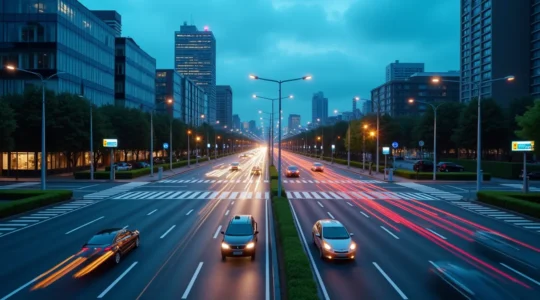
The future of road safety isn’t just in the car; it’s in the robust communication fabric connecting it to the world. Vehicle-to-Everything (V2X) relies on a blend of technologies like 5G and DSRC, each with specific strengths for different safety…
Read more
The key to a faster city commute isn’t just a better navigation app; it’s learning to synchronize your driving with the city’s underlying digital rhythm. Smart infrastructure like “green waves” creates predictable traffic patterns that you can learn to follow….
Read more
The debate over LiDAR vs. cameras is a distraction; achieving true vehicle autonomy hinges on the fundamental physics of direct measurement versus probabilistic inference. LiDAR provides non-negotiable spatial resolution and geometric certainty that cameras, relying on inference, cannot mathematically guarantee…
Read more
An autonomous vehicle’s safety isn’t about the number of sensors it has, but how its architecture manages their inherent physical limitations and predictable failure modes. Sensor performance is fundamentally compromised by environmental factors like dirt, fog, and even temperature changes,…
Read more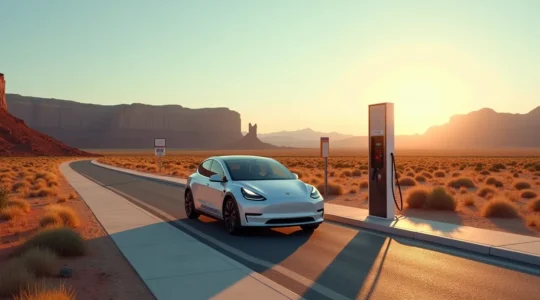
In summary: Treat EV road-tripping not as a drive, but as a series of logistical operations balancing time, cost, and reliability. Leverage the charging curve by planning for shorter, more frequent stops (20-80% state of charge) to maximize charging speed….
Read more
In summary: Making the switch to an EV is less about learning new buttons and more about unlearning a lifetime of combustion engine driving habits. Mastering concepts like one-pedal driving and proactive battery management is key to overcoming range anxiety…
Read more
Your EV is more than a car; it’s a powerful home energy asset that can provide backup power and generate income. Profitability depends directly on regional electricity price gaps (“grid arbitrage”) and is not guaranteed everywhere. Proper planning of your…
Read more
The transition to sustainable mobility is less about the vehicles we use and more about the strategic revaluation of every urban asset, from parking lots to curb space. This shift creates “stranded assets” like gas stations while simultaneously boosting property…
Read more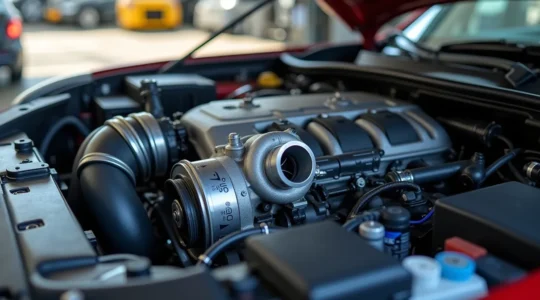
The myth that downsized turbo engines are inherently unreliable for heavy use is outdated; their longevity is determined by disciplined management of their three primary stressors. Engine durability hinges on controlling heat through proper oil selection and cooldown procedures to…
Read more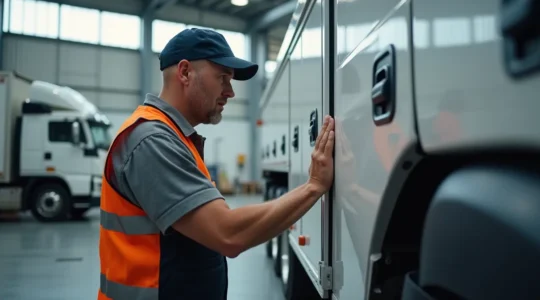
Contrary to common skepticism, the perceived fragility and high repair costs of aluminum work trucks are largely myths; the real story is one of superior lifecycle profitability when analyzed correctly. Modular panel design often makes repairs faster and more contained…
Read more