
In summary:
- Your car’s fluids obey physical and chemical laws; understanding them is key to proper maintenance.
- Fluid levels change with temperature (thermal expansion), so checking them correctly is crucial.
- Mixing incorrect fluid types can cause irreversible chemical damage, not just poor performance.
- Change intervals depend more on driving conditions and engine type than on mileage alone.
- Fluid analysis is like a blood test for your car, predicting major failures before they happen.
Lifting the hood of a car for the first time can be intimidating. You’re met with a maze of hoses, a block of metal, and a series of mysterious caps and dipsticks. The common advice—”just check your oil”—feels inadequate, leaving you with more questions than answers. What do the different colors mean? Why are there “min” and “max” lines? Can you mix different brands of coolant? This confusion leads many car owners to either neglect these vital systems or follow maintenance rules blindly, without understanding the reasons behind them.
Most guides will give you a simple list of what to do, treating your vehicle like a simple machine with on/off switches. They tell you to change your oil every X thousand miles and to keep fluids topped up. But what if the key to true vehicle longevity wasn’t just following the rules, but understanding the science behind them? The liquids coursing through your engine and transmission are not just passive lubricants; they are highly engineered chemical compounds operating under extreme stress, heat, and pressure. Their behavior is governed by principles of physics and chemistry that directly impact the health and lifespan of every major component.
This article will pull back the curtain on that hidden science. We won’t just tell you what to do; we will explain *why* you’re doing it. We will explore the concepts of thermal expansion, viscosity breakdown, and chemical incompatibility. By the end, you will no longer see a confusing collection of reservoirs but a dynamic, interconnected ecosystem. You will be empowered to make informed decisions, ask smarter questions of your mechanic, and transform from a passive car owner into a knowledgeable custodian of your vehicle’s long-term health.
To navigate this complex topic, we will break down the essential principles one by one. This guide will walk you through the core scientific concepts, the common mistakes to avoid, and the diagnostic techniques that can save you from costly repairs down the road.
Summary: The Science Behind Your Car’s Vital Fluids
Understanding the thermal expansion of fluids
One of the first things a new car owner learns is to check fluid levels, but the “min” and “max” lines on a dipstick or reservoir can be confusing. Why is there a range? The answer lies in a fundamental principle of physics: thermal expansion. Just like the mercury in a thermometer rises when it’s hot, all the fluids in your vehicle—oil, coolant, and transmission fluid—expand as they heat up and contract as they cool down. This is not a minor effect; it’s a significant, measurable change that maintenance procedures are designed to accommodate.
For example, automatic transmission fluid (ATF) has a significant expansion rate. Engineering discussions show that a typical ATF can have a thermal expansion coefficient of around 0.07% per degree Celsius. This means the volume of fluid can increase by over 4% as it goes from a cool start-up temperature to its normal operating temperature. This is precisely why many manufacturers instruct you to check transmission fluid levels when the engine is hot and running. Checking it cold would give a falsely low reading, potentially leading you to overfill the system.
Overfilling is just as dangerous as underfilling. An overfilled system doesn’t leave enough room for the fluid to expand. This can cause the expanding fluid to be forced out of seals or vents, or to become aerated (foamy) by churning parts like the transmission’s planetary gears. Foamy fluid does not lubricate or cool effectively, leading to accelerated wear and overheating. Understanding that the “min” and “max” lines represent the “cold” and “hot” levels, respectively, is the first step to moving beyond simply looking at a dipstick and truly understanding what it’s telling you.
The mistake of mixing fluid types
When you’re low on coolant or washer fluid, the temptation to grab the nearest bottle at the gas station is strong. However, not all fluids are created equal, and mixing different types can have catastrophic consequences that go far beyond poor performance. This is especially true for coolants and transmission fluids, where incompatible chemistries can react to form sludge, gels, or corrosive compounds. This isn’t just a theoretical problem; it’s a chemical reaction happening inside your engine’s most sensitive passages.
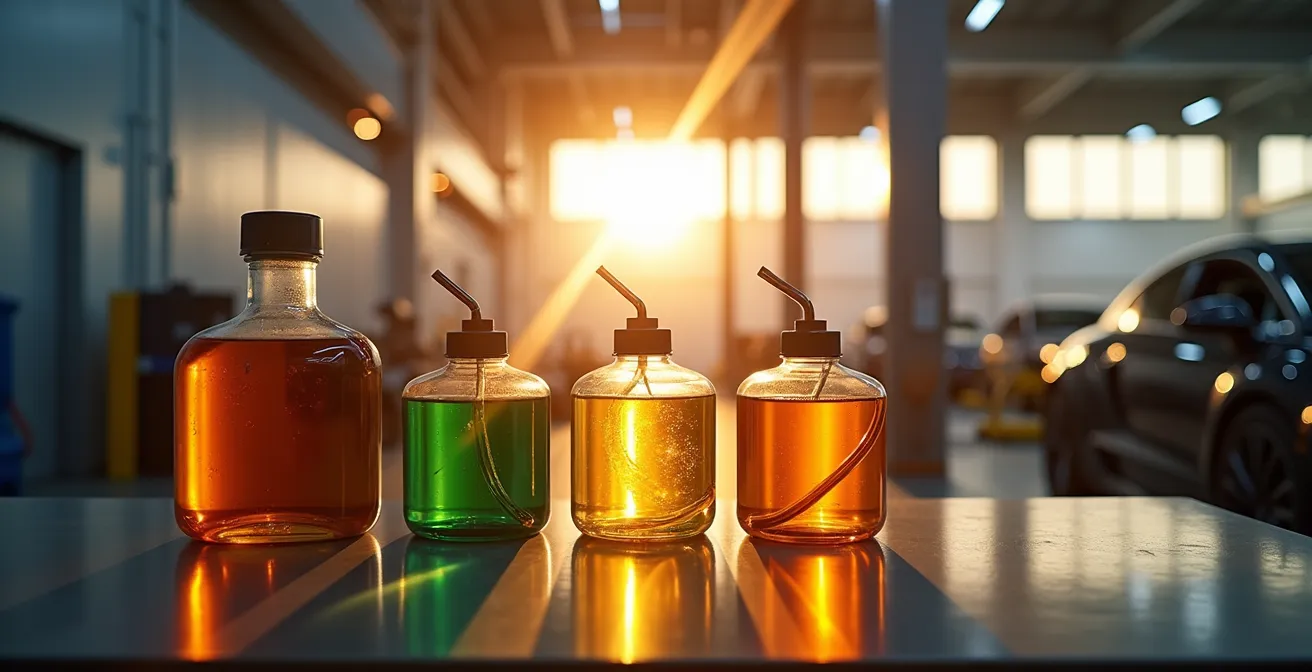
Coolants, for instance, come in various formulations identified by their color—typically green, orange, pink, or blue. These colors represent different additive packages: Inorganic Additive Technology (IAT), Organic Acid Technology (OAT), and Hybrid Organic Acid Technology (HOAT). Mixing an OAT coolant with an IAT coolant can cause the corrosion inhibitors to fall out of the solution, forming a thick, gel-like substance. This gel can clog the narrow passages of your radiator and heater core, leading to severe overheating and costly repairs.
The same principle applies to Automatic Transmission Fluids (ATF), which are engineered with specific friction modifiers for different transmission designs. Using the wrong type can lead to shuddering, slipping, and premature clutch wear. The only safe assumption is that different fluids are incompatible unless explicitly stated otherwise. Before adding any fluid, always check the specifications listed on the reservoir cap, the dipstick, or in your owner’s manual. When in doubt, do not top up.

As the image above illustrates, the meeting of two incompatible fluids is not a simple mixing but a chemical transformation. The resulting precipitation can restrict flow and starve critical components of lubrication and cooling, turning a simple top-up into a major mechanical failure. To prevent this, a strict protocol is necessary.
Your action plan: Avoiding fluid incompatibility
- Verify fluid type: Always check your owner’s manual or the fluid cap for the exact specification (e.g., “ATF+4”, “HOAT Coolant”) before purchasing or adding any fluid.
- Do not mix coolant types: Never mix different colors or technologies (OAT, IAT, HOAT). If you’re unsure what’s in your system, a complete flush is the only safe option.
- Perform a full system flush when switching: If you decide to change to a different type of fluid (e.g., from conventional to synthetic oil), ensure the old fluid is completely flushed from the system to prevent additive conflicts.
- Prioritize manufacturer recommendations: Using the fluid recommended by your vehicle’s manufacturer is the simplest way to guarantee compatibility and protect your warranty.
- Consult a professional if mixed: If you accidentally mix fluids, do not start the engine. Consult a trusted mechanic immediately to assess the situation and determine if a flush is needed.
Optimizing fluid change intervals
The old mantra of “change your oil every 3,000 miles” is one of the most persistent yet outdated pieces of automotive advice. While it was relevant for older engines and conventional oils, modern vehicle technology has made fluid change intervals far more nuanced. Sticking to an arbitrary number can mean you’re either wasting money on unnecessary changes or, worse, unknowingly damaging your engine by waiting too long. The key is to understand that the ideal interval is determined by three factors: engine technology, fluid type, and driving conditions.
Modern engines, coupled with advanced synthetic oils, have dramatically extended service intervals. It’s common for manufacturer recommendations to have evolved from the traditional 3,000 miles to intervals of 5,000, 7,500, or even 10,000 miles for normal driving. However, the definition of “normal” is key. The automotive industry defines “severe” driving conditions as frequent short trips (under 10 miles), stop-and-go city traffic, driving in extreme heat or cold, or towing a trailer. Most urban drivers fall into this “severe” category without realizing it, which requires them to follow a more frequent maintenance schedule.
Furthermore, new engine technologies like Gasoline Direct Injection (GDI) and turbocharging place immense stress on oil, leading to faster degradation. An oil change interval that is safe for a naturally aspirated engine could be dangerously long for its turbocharged counterpart. Understanding this relationship is crucial for proper maintenance.
The table below, based on general industry guidelines, illustrates how these factors influence recommended change intervals. Always consult your owner’s manual for your vehicle’s specific requirements.
| Fluid Type | Normal Driving | Severe Conditions | GDI/Turbo Engines |
|---|---|---|---|
| Engine Oil | 7,500-10,000 miles | 3,000-5,000 miles | 5,000 miles max |
| Transmission | 60,000-100,000 miles | 30,000-50,000 miles | 40,000 miles |
| Coolant | 50,000 miles/3 years | 30,000 miles/2 years | 30,000 miles |
| Brake Fluid | 24 months | 12-18 months | 12 months |
Comparing fluid brands
Walking down the automotive aisle reveals a dizzying array of fluid brands, each claiming superior performance, protection, and longevity. It’s easy to assume that the most expensive bottle or the one with the flashiest label is the best choice. However, for the vast majority of drivers, brand loyalty is less important than one critical factor: certification. Rather than focusing on the brand name, you should be looking for two small but vital symbols on the back of the bottle: the API donut and the ACEA specification.
The American Petroleum Institute (API) and the Association des Constructeurs Européens d’Automobiles (ACEA) are industry bodies that set minimum performance standards for lubricants. When an oil is “API Certified,” it means it has passed a rigorous battery of tests for things like wear protection, sludge prevention, and viscosity stability. These certifications are what guarantee a fluid will protect your engine as designed. Modern engines have parts rotating thousands of times per minute, and using an uncertified or improperly specified oil can lead to excessive friction and heat, compromising engine health.
So, is there a difference between a store-brand synthetic oil and a premium, race-proven brand? Yes, premium brands may use higher-quality base stocks and more robust additive packages that can offer better performance under extreme conditions (like on a racetrack). However, as long as a fluid—regardless of brand—meets the API and ACEA specifications required by your vehicle’s manufacturer, it will provide the necessary protection for normal and even severe daily driving. The key is to check your owner’s manual for the required specification (e.g., “API SP” or “ACEA C3”) and ensure the product you buy carries that exact certification. Choosing a certified product is the most important decision you can make.
Planning for used fluid analysis
Changing your car’s fluids is a fundamental part of maintenance, but what do you do with the old fluid? For most, it’s simply a waste product. But for those who want to take their vehicle maintenance to the next level, that used oil or transmission fluid is a treasure trove of information. Used Fluid Analysis (UFA) is a diagnostic process, similar to a blood test for a human, where a sample of used fluid is sent to a laboratory to be analyzed. This analysis can reveal the health of your engine or transmission with incredible precision, often predicting failures long before any symptoms appear.
The lab report breaks down several key metrics. It measures the levels of wear metals (like iron, copper, and aluminum), which indicate which specific internal components are wearing down. It checks for contaminants like silicon (dirt), sodium (coolant), or fuel, which signal leaks or other system failures. Finally, it assesses the health of the fluid itself, measuring its viscosity and the depletion of critical additives. This data provides a complete picture of what’s happening inside your machinery.
This proactive approach is especially powerful for automatic transmissions, where failures are both common and expensive. In fact, some industry experts estimate that up to 90% of automatic transmission failures could be predicted and potentially prevented through regular fluid analysis. By spotting rising wear metals or fluid degradation early, an owner can take corrective action—like changing the fluid or replacing a minor part—before a complete transmission rebuild becomes necessary.
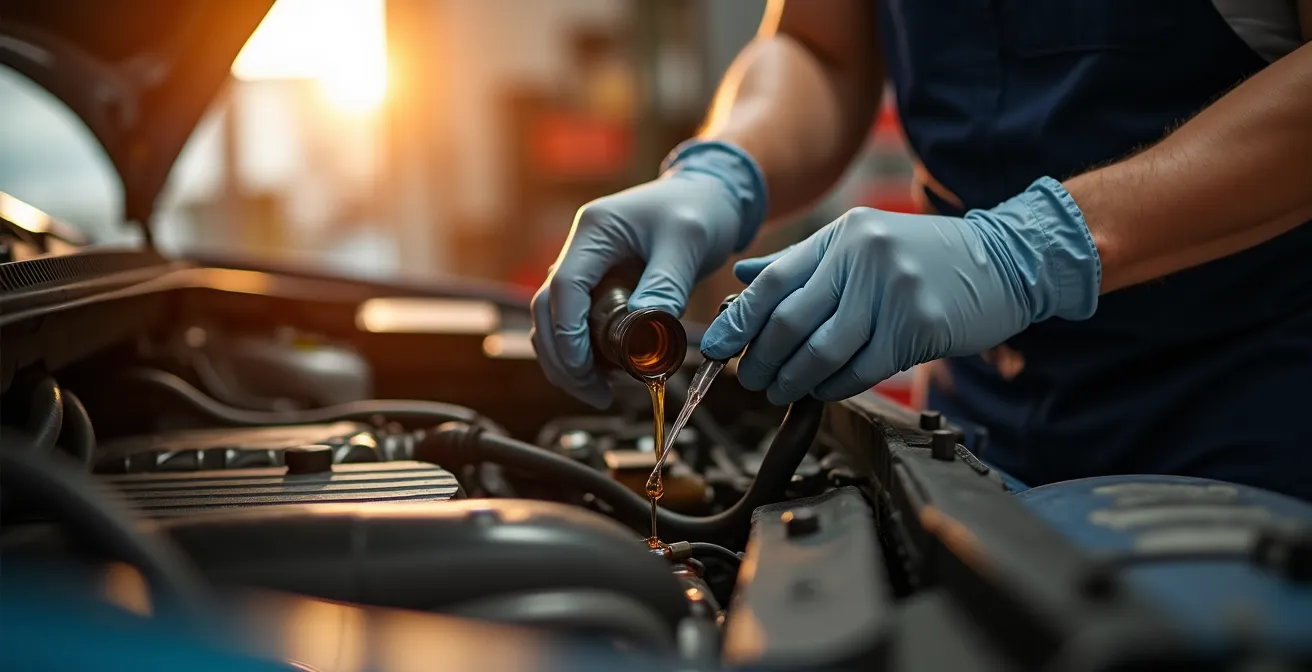
While it may seem like an advanced technique, collecting a sample is simple, and analysis kits are widely available online for a reasonable cost. By incorporating UFA into your long-term maintenance strategy, you shift from a reactive to a predictive and data-driven approach, giving you unparalleled insight into the true condition of your vehicle.
Understanding fluid color
One of the most common pieces of advice given to new car owners is to “check the color” of their fluids. While color can be an indicator, it’s also one of the most misunderstood aspects of fluid diagnostics. Relying on color alone can lead to false conclusions, such as changing perfectly good oil or ignoring a serious transmission problem. The truth is that a fluid’s color tells only part of the story, and sometimes it can be misleading.
Take engine oil, for example. Many believe that oil that has turned dark or black is “dirty” and must be changed immediately. However, a primary job of modern engine oil is to clean the engine. Detergent additives are specifically designed to trap soot and other combustion byproducts and hold them in suspension, preventing them from forming sludge. This process naturally turns the oil dark. Therefore, dark oil is often a sign that the oil is doing its job correctly. A better indicator of oil condition is its smell and texture. Oil that smells burnt or feels gritty between your fingers indicates a problem, regardless of its color.
Similarly, new automatic transmission fluid (ATF) is typically bright red. This color is primarily a dye added to distinguish it from other fluids. Over time, heat and oxidation cause this dye to break down, and the fluid will turn a darker red or brown. While very dark, burnt-smelling ATF is a clear sign of trouble, a gradual shift to brown is a normal part of the fluid’s life cycle. On the other hand, ATF that appears pink and milky is a critical warning sign. This indicates coolant contamination, which can destroy a transmission in a very short time and requires immediate service. This is a case where color is a vital clue, but only when interpreted correctly.
Understanding oil viscosity under stress
When you choose an engine oil, the most prominent numbers on the bottle are its viscosity grade, such as “5W-30.” Viscosity is, simply put, a fluid’s resistance to flow. The “W” stands for winter, indicating its performance at cold temperatures, while the second number indicates its performance at engine operating temperatures. For decades, these numbers were all a consumer needed. However, the extreme conditions inside modern engines—particularly those with direct injection and turbochargers—have made a lesser-known specification critically important: HTHS viscosity.
HTHS, or High-Temperature/High-Shear, viscosity measures an oil’s ability to maintain its protective film under the most stressful conditions imaginable: extreme heat combined with the intense mechanical shearing forces found between a piston ring and a cylinder wall, or in a turbocharger’s bearings. An oil with a robust HTHS rating will resist being thinned out or torn apart, maintaining a strong layer of protection. An oil with a poor HTHS rating can break down, leading to metal-on-metal contact and accelerated wear. As one expert notes, this is a crucial but often overlooked metric.
HTHS (High-Temperature/High-Shear) viscosity is the single most important specification for modern turbocharged engines, yet it’s rarely listed on oil bottles
– Technical specialist at Rohnert Park Transmission, Automotive Fluids Guide
The stress on oil in modern engines is immense. For example, GDI engines are known for being particularly harsh on lubricants. This is why using an oil that not only has the correct “5W-30” grade but also meets the specific HTHS requirements of the manufacturer (like certain ACEA specifications) is vital. It’s the difference between an oil that merely meets the basic viscosity standard and one that can truly withstand the forces at play, ensuring your engine is protected when it’s working its hardest.
Key takeaways
- Fluid health is about more than just level and color; it’s about chemical stability and performance under stress.
- Maintenance intervals are not one-size-fits-all. They must be adapted to your vehicle’s technology and your specific driving habits.
- Proactive diagnosis through fluid analysis is the most powerful tool for preventing catastrophic and expensive component failures.
Diagnosing transmission problems before total failure
Of all the major components in a vehicle, the automatic transmission is one of the most complex and expensive to repair. Fortunately, transmissions rarely fail without warning. They almost always provide subtle clues that something is amiss, and understanding these signs can be the difference between a minor adjustment and a multi-thousand-dollar rebuild. The key is to pay attention to how the car feels and behaves, and to understand the role other fluid systems play in overall health.
Early warning signs of transmission trouble often manifest as small inconsistencies in shifting. You might notice a “shift flare,” where the engine’s RPMs spike briefly between gears. You might feel a harsh clunk when shifting from Park into Drive, or notice the transmission “hunting” for the right gear while driving up a slight incline. These are not normal behaviors; they are symptoms of internal problems, such as worn clutches, sticking valves, or degraded fluid. Monitoring ATF temperature with a simple OBD2 scanner can also provide critical data; sustained temperatures above 200°F (93°C) are a sign of trouble and will rapidly degrade the fluid.
It’s also important to remember that vehicle systems are interconnected. A problem that seems unrelated can have a direct impact on the transmission or brakes. For instance, brake fluid is hygroscopic, meaning it is designed to absorb moisture from the air. Over time, this moisture drastically lowers the fluid’s boiling point. Standard brake fluid can absorb 3% or more moisture from the air each year, which can drop its boiling point by over 50°F (28°C). Under heavy braking, this can cause the fluid to boil, creating vapor bubbles in the lines and leading to a spongy or completely unresponsive brake pedal. This is why brake fluid must be changed every two years, regardless of mileage.
Now that you are equipped with this foundational knowledge, the next time you have your vehicle serviced or perform a check yourself, you can do so with confidence. You can ask your mechanic about the specific API certification of the oil being used or inquire about a brake fluid flush based on time, not just mileage. This proactive and informed approach is the final and most important step in ensuring the long-term health and reliability of your vehicle.
Frequently asked questions on Mastering the fluid ecosystem for vehicle longevity
Why does new transmission fluid turn from red to brown?
Heat and oxidation break down the dye additives over time, but brown fluid isn’t necessarily bad – check for burnt smell instead
What does milky or foamy oil indicate?
Coolant contamination – this requires immediate attention as it indicates head gasket or internal seal failure
Why are coolants different colors?
Colors indicate different chemical formulations (IAT, OAT, HOAT) that must not be mixed