
In summary:
- Treat EV road-tripping not as a drive, but as a series of logistical operations balancing time, cost, and reliability.
- Leverage the charging curve by planning for shorter, more frequent stops (20-80% state of charge) to maximize charging speed.
- Acknowledge the “reliability delta” by using real-user data (like PlugShare) to verify charger functionality, not just its existence on a map.
- Build a three-tiered contingency plan (Plan A, B, and C) for every charging stop to eliminate the risk of being stranded.
- Optimize your budget by strategically using network subscriptions, avoiding peak rates, and calculating the trade-off between toll roads and more efficient scenic routes.
The thought of a cross-country trip in an electric vehicle conjures a specific kind of dread for many first-time drivers: the low-battery warning chiming in the middle of nowhere. This “range anxiety” is the primary barrier, and the common advice—”just use an app to plan your route”—feels woefully inadequate. These apps are a starting point, but they often fail to account for the complex, real-world variables that can turn a dream vacation into a logistical nightmare. They might show a charger, but is it working? Is it the right plug? Will you be stuck there for two hours just to get another 100 miles of range?
This is where most guides fall short. They treat the journey as a simple line on a map dotted with charging stations. The truth is, a successful long-distance EV trip is not about driving; it’s about mastering a new kind of travel logistics. It requires a shift in mindset from a passive driver to an active operational manager of your vehicle’s energy. The key isn’t just knowing where the chargers are, but understanding the intricate calculus of energy transfer—balancing the physics of your battery with the unreliability of public infrastructure and the preciousness of your time.
But what if the solution wasn’t to fear these variables, but to control them? Instead of just hoping for the best, you can adopt a logistical framework that transforms anxiety into confidence. This is not another list of apps to download. This is a playbook for managing your journey like a professional, turning each stop into a calculated decision that optimizes for speed, cost, and peace of mind. By understanding the core principles of energy transfer logistics, you can conquer range anxiety for good.
This comprehensive guide will walk you through the essential logistical pillars for planning and executing a seamless long-distance EV journey. We will delve into the technical, practical, and financial strategies that empower you to take control, ensuring your focus remains on the road ahead, not the battery gauge.
Summary: Your Logistical Playbook for EV Road Trips
Understand the charging curve
The single most important technical concept to master for efficient EV travel is the charging curve. Your vehicle’s battery does not charge at a constant speed. It accepts power fastest when the state of charge (SoC) is low—typically between 20% and 50%—and then dramatically slows as it approaches 100%. The final 20% of a charge, from 80% to 100%, can often take as long as the charge from 20% to 80%. Ignoring this principle is the most common and time-consuming mistake a new EV driver can make on a road trip.
The logistical implication is profound: aiming for a full 100% charge at every DC fast-charging (DCFC) stop is highly inefficient. Instead, you should embrace a strategy of shorter, more frequent stops. Planning two 20-minute sessions that take your battery from 20% to 70% will often be faster than a single 50-minute stop that pushes you from 20% to 90%. This strategy keeps your battery in the fastest part of its charging curve, minimizing your total “dwell time” at chargers.
A real-world example from a 6,000-mile cross-continent journey in a Volkswagen ID.4 demonstrated this perfectly. The driver consistently kept charges between a 20-80% window, which maximized charging speed and minimized total trip time across 54 separate charging sessions. This strategic approach also delivered significant savings, with an average cost of just $15 per session. Furthermore, modern EVs allow for battery preconditioning, a feature that warms the battery as you navigate to a charger, ensuring it can accept the maximum possible speed upon arrival, especially in cold weather.
While the charging infrastructure is improving, with a J.D. Power study showing that 14% of EV owners visited a charger without charging in 2025 (down from 19% in 2024), optimizing your time at functional stations remains critical. Using your vehicle’s app to monitor the real-time charging speed (measured in kW) allows you to make an informed decision and depart the moment the speed begins to taper off significantly.
The network reliability error
The second logistical pillar is confronting the “reliability delta”—the often-significant gap between a charger’s existence on a map and its real-world functionality. A route planning app might show a dozen stations along your path, but this data is useless if half of them are out of order, occupied, or operating at a fraction of their advertised speed. Relying solely on the network’s own app is a recipe for frustration. The critical error is trusting availability data without verifying reliability.
This is not just anecdotal. The problem is systemic, as a 2024 study from the American Enterprise Institute revealed that only 34.4% of DC fast charging stations on major US interstates provide the real-time status data needed for true reliability. This data void forces drivers to rely on crowdsourced intelligence. Apps like PlugShare are indispensable, providing recent user check-ins, photos, and comments that paint an accurate, up-to-the-minute picture of a station’s health. A station with multiple recent successful check-ins is a far safer bet than one with no activity for weeks or, worse, a string of “failed to charge” reports.
Network performance also varies significantly. While the Tesla Supercharger network has historically set the standard, other networks are catching up, though consistency remains a challenge. The key is to build a plan that is network-agnostic and prioritizes proven reliability over brand loyalty.
As this data from J.D. Power’s 2025 U.S. EVX Public Charging Study shows, user satisfaction varies greatly between networks, highlighting the importance of choosing your stops based on proven performance.
| Network | Satisfaction Score (1000 scale) | Key Strength | Challenge |
|---|---|---|---|
| Tesla Supercharger | 709 | Highest reliability | Score down 22 points YoY |
| OEM Networks (Mercedes, Rivian, Ford) | 709 | Matching Tesla quality | Limited footprint |
| Industry Average | 654 | Improving reliability | Payment/cost issues |
| Non-Tesla Average | ~620 | Growing network | Consistency varies |
Optimize meal stops
A long-distance trip requires stops for both the car and the driver. The logistical art is to make these needs overlap perfectly, a practice known as dwell time optimization. A 45-minute lunch break is a 45-minute charging opportunity. The key is to reverse the traditional planning process. Instead of finding a restaurant and hoping a charger is nearby, you must apply the “Charger-First” method: identify a reliable, high-speed charging station and then locate dining and restroom facilities within a comfortable walking distance.
This approach changes the landscape of potential stops. Isolated highway service stations may seem convenient, but they often have fewer chargers and limited food options. In contrast, a cluster of DCFC stalls in a large shopping center or strip mall parking lot offers a wealth of amenities. You can plug in your vehicle and then choose from multiple fast-food or sit-down restaurants, use cleaner restrooms, and stretch your legs in a more pleasant environment.
Case Study: The NPR “Point of Flux” Journey
During a 1,000-mile road trip in a Hyundai Ioniq 6, journalists from NPR found the charging infrastructure at a “point of flux.” They discovered that the most successful stops were those that combined charging with meals at strip mall locations. These spots not only provided adequate amenities but also offered more charging density. At one location, the Tesla Supercharger station had three times more stalls than the adjacent Electrify America station, reinforcing the need to check station size and user reviews before committing.
The type of meal also dictates the type of charger to target. For a quick 20-30 minute stop to grab a snack and use the restroom, a DC fast charger is essential. For a longer, more relaxed sit-down dinner, a Level 2 destination charger located directly at the restaurant can be a perfect fit. While much slower, it can provide a significant range boost over an hour or more, often at a lower cost or even for free. Always use tools like Google Maps’ Street View to pre-screen charging locations to confirm 24/7 access to amenities and assess the general safety and lighting of the area, especially for nighttime stops.
Compare plug standards
A critical hardware consideration in your logistical planning is the charging connector itself. For years, the North American EV market was split primarily between three standards: Tesla’s proprietary connector (now known as the North American Charging Standard or NACS), the Combined Charging System (CCS) used by most other manufacturers, and CHAdeMO, primarily used by the Nissan Leaf. This fragmentation created a major point of friction for non-Tesla drivers. However, the landscape is undergoing a seismic shift.
Between May 2023 and February 2024, a wave of major automakers—including Ford, GM, Rivian, Hyundai, and many others—announced they would be adopting the NACS port for their vehicles starting with 2025 models. As industry reports confirm, this transition is rapidly consolidating the market around a single plug standard. While this simplifies things for future owners, it creates a transitional period for current drivers. Owners of CCS vehicles will need an adapter to use many new Tesla Superchargers, while Tesla owners have long used adapters to access CCS stations.
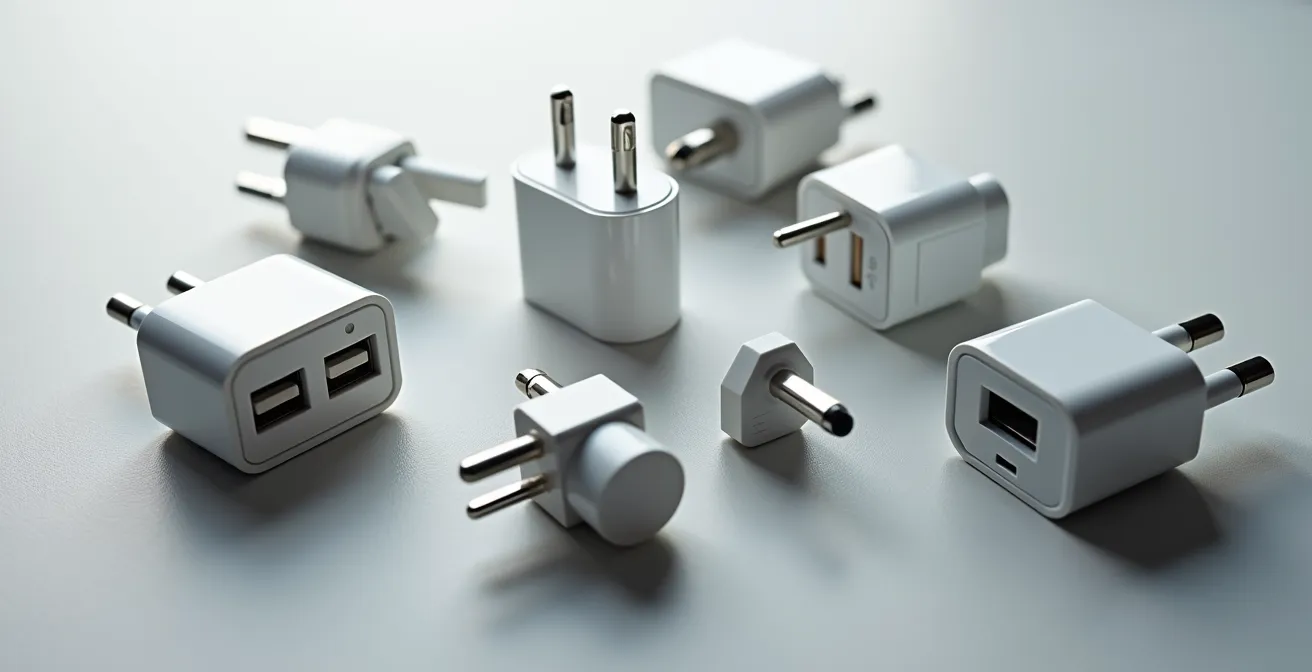
For your road trip, this means you must be acutely aware of two things: the native plug on your vehicle and the plugs available at your target charging stations. While most third-party network stations (like Electrify America and EVgo) offer both CCS and CHAdeMO plugs, the availability of each can vary. Tesla’s network is more complex: older Superchargers are NACS-only, while newer “Magic Dock” stations include a built-in CCS adapter, opening them up to other brands.
Your logistical checklist must include confirming you have the correct adapters for your planned route. If you have a CCS vehicle and plan to rely on Tesla’s expanding network, a high-quality NACS-to-CCS adapter is an essential piece of equipment. Before setting out, verify that your adapter is rated for the high power of DC fast charging and that your vehicle’s software is updated to support it. Filtering charging maps by your specific plug type is a non-negotiable step in planning each leg of your journey.
Plan backup routes
No logistical plan is complete without robust contingency planning. Even with careful research, you may arrive at a charging station to find it completely non-functional or with a long queue of other vehicles. The antidote to the panic this can induce is having a pre-planned, multi-tiered backup strategy. As Sanna Boman of Roadtrippers Magazine notes, “The key to a successful EV road trip is planning, planning, and more planning.” This means never relying on a single point of success.
For every planned charging stop, you must identify at least two alternatives. This forms a three-tiered protocol. Plan A is your primary target: a highly-rated, multi-stall DCFC station with recent positive reviews. If Plan A fails, you immediately pivot to Plan B: an alternate DCFC station, ideally on a different network, located 10-20 miles away. This diversification protects you from a localized network outage. If both high-speed options fail, you activate Plan C: a reliable, albeit slower, Level 2 charger at a location like a hotel, car dealership, or municipal parking garage. This is your safety net, an option that can provide enough range to reach the next viable fast charger, even if it requires an overnight stay.
A crucial part of this strategy is calculating your “point of no return” for each leg of the journey. This is the battery percentage below which you no longer have enough range to reach your Plan B or Plan C charger. Once you cross this threshold, you are fully committed to Plan A. Prudent logistical management means initiating your journey to the charging area well before hitting this critical point. It’s also wise to download offline maps of your primary and backup charging locations, as cell service can be unreliable in the very rural areas where you need it most.
Your Three-Tier Backup Planning Checklist
- Plan A: Identify the primary DC fast charger with multiple stalls and recent, positive user reviews on PlugShare.
- Plan B: Locate an alternate DC fast charger, preferably on a different network, within a 10-20 mile radius as your immediate backup.
- Plan C: Research a viable Level 2 charger at a hotel, car dealership, or public garage that can serve as an overnight or emergency charging option.
- Calculate your ‘point of no return’ battery percentage for each leg, ensuring you always have enough range to divert to Plan B or C.
- Download offline maps and keep a physical or digital list of all three charging tiers for each stop in case of connectivity issues.
Plan the route to avoid costly tolls
Effective trip logistics extend beyond just energy management; they encompass total cost optimization. Toll roads present an interesting calculus for the EV driver. While they often offer the most direct route, they come at a premium cost and can feature more expensive charging options at designated service plazas. The counter-intuitive truth is that avoiding tolls can sometimes be more economical, even if it means driving a few extra miles.
The primary reason for this is efficiency. Most EVs operate at peak efficiency at steady speeds between 55-65 mph. The higher speeds common on toll highways (70-80 mph) significantly increase energy consumption due to aerodynamic drag. Slower state highways and scenic routes, while longer in distance, can result in lower kWh consumption per mile, effectively offsetting the additional mileage. This strategy requires a careful trade-off analysis before your trip begins.
Case Study: The Toll-Free Mach-E Advantage
Over the course of three road trips totaling 4,200 miles in a Ford Mustang Mach-E, a driver discovered that avoiding toll roads often led to better overall trip economics. The lower average speeds on scenic routes improved the vehicle’s efficiency so much that it compensated for the longer distances. An added benefit was the availability of more frequent and often cheaper charging options in small towns, compared to the pricey, crowded chargers found at highway service areas. The savings on tolls and charging more than made up for the extra drive time.
To make an informed decision, use a robust planning tool like A Better Routeplanner (ABRP), which allows you to model energy consumption with settings like “avoid highways.” Compare the projected toll costs for the direct route against the estimated additional energy cost for the longer, non-toll route. Remember to factor in the typically higher per-kWh rates at highway service plazas, which can be 20-30% more expensive than stations in competitive, off-highway commercial areas. Finally, research state-specific EV toll discount programs, such as those offered through E-ZPass or FasTrak, which could tip the financial scales back in favor of the toll road.
Plan stops based on rest area design
Not all charging stops are created equal. The physical design and available amenities of a rest area have a major impact on the quality of your “dwell time.” A stop is more than just a place to plug in; it’s a chance to rest, eat, and recharge emotionally as well as electrically. As the AAA notes, a successful trip involves shifting the mindset from “wasted time” at a charger to a “restorative break” for the driver. Therefore, your logistical plan must consider the human factor by carefully selecting stops based on their design and amenities.
Highway service plazas offer the benefit of 24/7 access, security, and basic food options, making them a reliable choice for late-night driving. However, they can be crowded, and their amenities are often limited and overpriced. Large shopping centers, on the other hand, provide a much wider array of restaurants and shops but may require a longer walk from the charging stalls. For overnight stays, nothing beats a hotel with destination charging. You gain the comfort of your own room while your car gets a full Level 2 charge, ensuring you start the next day with 100% battery.
The physical layout of the charging station itself is also a critical consideration. For drivers towing a trailer or carrying roof-mounted cargo, a pull-through charging stall is a massive convenience, saving the hassle of detaching the trailer. Unfortunately, these are still rare. For drivers needing a mental break from the road, a charging station located adjacent to a park or with access to walking trails can be a true oasis, allowing for light exercise and fresh air. This is far more restorative than waiting in a stark parking lot.
This table breaks down the pros and cons of common charging locations, helping you match the stop to your specific need at that moment in your journey.
| Station Type | Pros | Cons | Best For |
|---|---|---|---|
| Highway Service Plaza | 24/7 access, security, food options | Crowded, expensive | Night driving |
| Shopping Center | Multiple amenities, restaurants | May require walking | Meal stops |
| Hotel Destination Charger | Comfortable waiting area | Slower charging (Level 2) | Overnight stays |
| Pull-through Design | Easy access with trailers | Limited availability | Towing/cargo |
| Park Adjacent | Walking trails, scenic | May lack amenities | Driver fatigue breaks |
Key takeaways
- The charging curve is your most important tool; avoid charging beyond 80% at DCFC stations to save significant time.
- Real-world reliability trumps on-paper availability. Use crowdsourced data from apps like PlugShare to verify a station is functional before you go.
- A three-tier contingency plan (Plan A, B, C) for every stop is the ultimate antidote to range anxiety.
Budget a classic American road trip without compromise
A comprehensive logistical plan culminates in a realistic budget. While EVs are significantly cheaper to “fuel” than gasoline cars, the cost of a long-distance trip is not zero, and it can vary dramatically based on your planning. Simply dividing the total mileage by your car’s efficiency won’t produce an accurate forecast. You must account for regional electricity price differences, network subscription fees, and idle fees.
Charging costs are not uniform across the country. As recent cross-country trip data shows, EV charging costs can average around $15 per session but can range anywhere from $5 to over $24 depending on the state, the network, and the time of day. California, for example, has much higher electricity rates, especially during peak hours, than states in the Pacific Northwest. Your budget must reflect this regional variance.
One of the most effective ways to control costs is through strategic use of network subscriptions. Many charging networks, like Electrify America, offer a monthly pass (e.g., Pass+) that provides a significant discount—often around 25%—on per-kWh or per-minute rates. If your trip is longer than a week, the monthly fee is almost always paid back in savings after just a few charging sessions. It’s also critical to book hotels that offer free Level 2 charging. Major chains like Hilton are aggressively expanding their networks, with plans to install 20,000 chargers by 2025, allowing you to start each day with a full battery at no extra cost.
Finally, your budget should include a buffer for the unexpected. A successful multi-state EV trip to national monuments, for instance, required careful navigation of “charging deserts.” The family treated their EV’s large battery as a mobile power source for camping equipment, but this was only possible because they planned to secure a full charge overnight at a park lodge’s destination charger. This highlights the need to budget not just for the drive, but for the energy required at your destinations. By combining network subscriptions, free hotel charging, and planning around regional price differences, you can execute a classic road trip without financial surprises.
By shifting your mindset from a passive driver to a proactive logistical manager, you can transform the daunting prospect of a long-distance EV trip into a rewarding and seamless adventure. The key is to take control of the variables—time, reliability, and cost—through diligent planning and strategic decision-making. Now, it’s time to put this playbook into action.