
The real difference between OEM and aftermarket isn’t just price—it’s managing the risk of ‘cascading failures’ where a cheap part causes expensive, system-wide damage.
- High-risk electronics (sensors) demand OEM to prevent costly misdiagnoses (‘diagnostic ghosts’).
- Low-risk components (body panels, mirrors) are prime candidates for high-quality aftermarket savings.
Recommendation: Base your decision on a part’s system-criticality and potential for creating diagnostic chaos, not just its initial cost.
When a mechanic presents you with a repair estimate, the choice between Original Equipment Manufacturer (OEM) parts and aftermarket alternatives can feel like a simple trade-off between cost and quality. The OEM part, identical to the one installed at the factory, comes with a higher price tag and a promise of perfect compatibility. The aftermarket part offers significant savings but introduces a variable of uncertainty. This decision, however, is far more complex than a mere budget consideration. It’s a calculated risk assessment where a small, upfront saving can lead to significant downstream costs.
Many discussions define the parts landscape by grouping them into OEM, OES (Original Equipment Supplier, who makes the part for the brand), and aftermarket. While accurate, this overlooks the most critical factor: the part’s function within the vehicle’s interconnected systems. Modern vehicles are not just collections of mechanical components; they are sophisticated electronic networks. A single out-of-spec component can create a ripple effect, causing diagnostic confusion, damaging other parts, and turning a simple repair into a costly and frustrating ordeal.
But if the genuine answer isn’t just “always buy OEM,” what is the correct approach? The key is to move beyond a generic cost-vs-quality mindset and adopt a risk-based framework. It involves understanding which parts are low-risk opportunities for savings and which are high-risk components where only an OEM part will suffice to protect the vehicle’s integrity and your wallet. This guide will provide that framework, moving from the most critical systems to the least, to help you make an informed, technically sound decision.
This article breaks down the decision-making process into a clear, risk-based hierarchy. By examining specific component categories, you will learn to identify where savings are smart and where they are a dangerous gamble.
Summary: OEM vs. Aftermarket Parts: A Risk-Based Guide to Smart Savings
- Understanding the Risks of Cheap Electronic Sensors
- The Safety Mistake with Brakes
- Optimizing the Bodywork Budget
- Comparing Part Warranties
- Planning the Replacement of Wear and Tear Parts
- The Alternator Misdiagnosis Error
- Optimizing the Choice of Friction Materials
- Structuring Preventive Maintenance to Reduce Downtime
Understanding the Risks of Cheap Electronic Sensors
In a modern vehicle, electronic sensors are the nervous system, constantly feeding data to the car’s central computer (ECU). When it comes to these components, choosing a cheap aftermarket part is one of the highest-risk decisions a car owner can make. The initial saving is negligible compared to the potential for catastrophic diagnostic errors. These parts are notorious for creating “diagnostic ghosts”—false error codes that lead mechanics to misdiagnose and replace perfectly good, expensive components.
The problem lies in precision. An OEM sensor is calibrated to the exact specifications of the vehicle’s software. An aftermarket version may function, but its data output might be slightly out of tolerance. This deviation can trigger a chain reaction across the Controller Area Network (CAN bus). Automotive technician discussions highlight a stark reality, with some reporting a failure rate of 50-60% for certain aftermarket electronic parts over a 2-3 year period, compared to near-zero for genuine equivalents.
Case Study: The $30 Sensor That Cost $500
Professional mechanics frequently report that aftermarket sensors cause cascading system errors. In a common scenario, a faulty $30 aftermarket camshaft or crankshaft position sensor sends slightly incorrect data to the ECU. The computer, unable to reconcile this data with information from other systems, may incorrectly flag the transmission control module or even the ECU itself as faulty. This leads to the unnecessary replacement of components costing over $500, all while the root cause—the cheap sensor—remains.
To avoid this, insist on OEM or, at a minimum, OES (Original Equipment Supplier) sensors for any part that communicates on the CAN bus. This includes MAF sensors, O2 sensors, wheel speed sensors, and engine management sensors. The slight premium for a genuine part is an inexpensive insurance policy against cascading electronic failures and hours of costly diagnostic labor.
The Safety Mistake with Brakes
The braking system is arguably the most critical safety feature on any vehicle, and it’s a domain where the “good enough” mentality can have severe consequences. While the brake parts segment dominates the aftermarket industry, the quality difference between OEM and low-end aftermarket components can be dramatic. The mistake is viewing brake parts like pads and rotors as standalone items. In reality, they are a finely tuned system where material composition is everything.
OEM brake pads and rotors are engineered together. Their friction materials, heat dissipation characteristics, and wear rates are designed to work in synergy for quiet, consistent, and predictable stopping power under a wide range of conditions. A cheap aftermarket pad might be made of a harder, more abrasive compound. While it may stop the car, it can cause accelerated wear or “glazing” on the rotors, leading to reduced performance, brake fade, and a pulsating pedal. Conversely, a pad that is too soft will wear out prematurely and produce excessive dust.
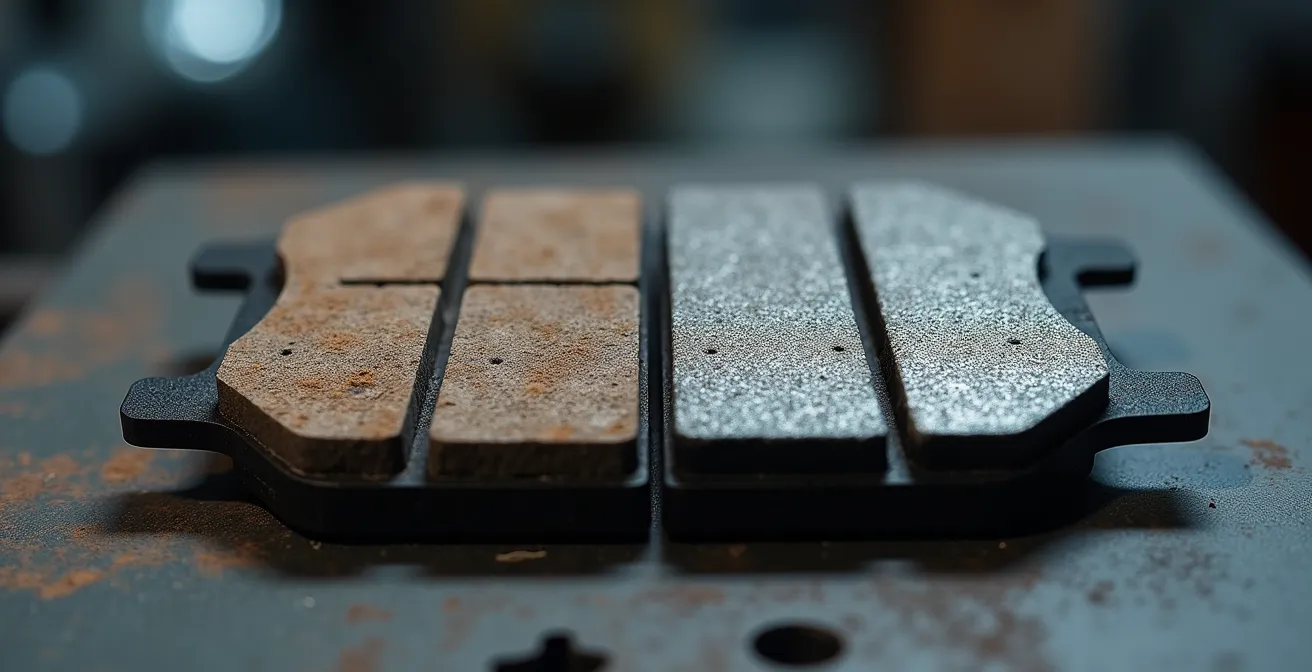
This image highlights the subtle but critical differences in material science between components. A superior part often features a more uniform and denser friction material, essential for consistent performance and safety.
For brake components, the smart choice is to prioritize OEM or premium, well-regarded aftermarket brands known for their R&D and quality control. Opting for the cheapest available option introduces an unacceptable level of risk to your vehicle’s most important safety system. Don’t compromise on the components that are solely responsible for stopping your car.
Optimizing the Bodywork Budget
After discussing high-risk electronic and safety systems, we now turn to an area where aftermarket parts present a significant and intelligent opportunity for savings: bodywork. Unlike a sensor or brake pad, a fender, bumper cover, or mirror typically has no impact on the vehicle’s mechanical or electronic performance. Here, the primary criteria are fit, finish, and cost, making it the perfect category for strategic budgeting. Aftermarket parts can often be sourced for 20% to 50% less than their OEM counterparts.
However, “aftermarket” is not a monolith. Quality can vary. For cosmetic parts, look for CAPA (Certified Automotive Parts Association) certified components. A CAPA certification ensures that an aftermarket part meets or exceeds standards for fit, material quality, and safety, making it a functional equivalent to the OEM part. This is especially important for components like bumper reinforcements that play a role in crash safety.
For purely cosmetic damage, there is a clear hierarchy for optimizing your budget. An analysis from automotive experts provides a logical framework for making cost-effective decisions without sacrificing quality, starting with repair before considering replacement.
| Priority | Option | Cost Factor | Quality Impact |
|---|---|---|---|
| 1 | Paintless Dent Repair (PDR) | Lowest | No parts replacement needed |
| 2 | Used OEM parts from salvage | Medium | Perfect fit, lower cost |
| 3 | CAPA-certified aftermarket | Low | Tested for safety/compatibility |
By following this hierarchy—repairing first, then seeking used OEM or certified aftermarket parts—you can effectively manage repair costs for cosmetic damage without compromising the look or safety of your vehicle. This is the domain where aftermarket parts truly shine.
Comparing Part Warranties
A warranty can provide peace of mind, but not all warranties are created equal. The promise of a “lifetime warranty” on a cheap aftermarket part is often a marketing tactic that obscures a critical detail: the difference between a part warranty and a labor warranty. This distinction is the core of the warranty trap and can make a seemingly good deal incredibly expensive.
OEM parts installed by a dealership typically come with a comprehensive warranty that covers both the part itself and the labor to replace it if it fails within the warranty period. As the experts at J.D. Power note, this is a significant advantage. The manufacturer stands behind the entire repair.
Most Original Equipment Manufacturer (OEM) parts come with warranties, meaning the manufacturer will cover the cost of fixing or replacing a part if you meet the qualifications
– J.D. Power, Aftermarket vs Manufacturer Car Parts Guide
Aftermarket warranties, in contrast, often only cover the cost of the part itself. This creates a scenario where the “free” replacement part still costs you hundreds of dollars.
Case Study: The “Free” Part That Cost $300
An analysis of warranty structures reveals the critical flaw in many aftermarket offers. Imagine a $50 aftermarket water pump with a “lifetime warranty” fails after a year. The manufacturer will gladly send you a new $50 part. However, the warranty almost never covers the $300 in labor required for the mechanic to remove the old pump and install the new one. The dealer’s OEM warranty, on the other hand, would have likely covered both the part and the labor, resulting in a true zero-cost replacement for the customer.
When evaluating a part, always ask for the warranty details in writing. Specifically, clarify if the warranty covers labor costs for a replacement. A shorter, comprehensive OEM warranty that covers parts and labor is almost always more valuable than a “lifetime” aftermarket warranty that only covers the part itself. The total cost of failure, not the initial purchase price, is the most important metric.
Planning the Replacement of Wear and Tear Parts
The age of your vehicle is a major factor in developing an intelligent parts strategy. The goal shifts from preserving a new car’s value and warranty to ensuring reliable operation in the most cost-effective manner. With a significant portion of vehicles on the road being older—a 2023 analysis found that 42% of vehicles in the aftermarket are 12+ years old—a tiered strategy is essential.
For a car still under its factory warranty, using OEM parts is non-negotiable to avoid any potential for a denied claim. As the vehicle ages, the calculation changes. For a mid-life vehicle (5-10 years old), premium OES or top-tier aftermarket parts from reputable brands offer a balanced blend of quality and value. For older vehicles (10+ years), where resale value is less of a concern, value-oriented aftermarket or even used OEM parts from a salvage yard can be the most financially prudent choice, provided they are not for critical safety or electronic systems.
An effective long-term maintenance plan also involves bundling repairs. Labor is a significant portion of any repair bill. If a mechanic is already replacing a timing belt, for example, it is incredibly cost-effective to also replace the water pump and tensioners at the same time, even if they haven’t failed yet. You are leveraging the already-incurred labor cost to install fresh wear items, resetting the clock on multiple components for a fraction of the cost of doing them separately later.
Your Action Plan: Tiered Strategy Based on Vehicle Age
- 0-5 years: Prioritize OEM parts exclusively to protect the factory warranty and maximize resale value. Do not deviate for any repair.
- 5-10 years: Focus on premium OES/aftermarket or remanufactured OEM parts. Research reputable brands that specialize in your vehicle’s make.
- 10+ years: Prioritize value. Good-quality aftermarket parts or used OEM parts for non-critical systems offer the best cost efficiency.
- Bundle labor: When performing a labor-intensive repair (e.g., timing belt), identify and replace adjacent, accessible wear items (e.g., water pump, idlers) simultaneously to save on future labor costs.
By aligning your parts strategy with your vehicle’s lifecycle, you can make smarter, more economical decisions that balance reliability with budget.
The Alternator Misdiagnosis Error
The alternator is a classic example of a part where misdiagnosis is rampant and the terminology can be deliberately confusing. When a car has trouble starting or holding a charge, the alternator is often blamed. However, a failing battery is frequently the true culprit. A simple voltage test can prevent a costly mistake: with the engine running, a healthy alternator should produce between 13.5 and 15 volts. If the voltage is within this range, the problem likely lies elsewhere.
Even if the alternator is faulty, the choice of replacement is critical. You will often be presented with “rebuilt” or “remanufactured” options. These terms are not interchangeable. As experts in the field explain, a rebuilt alternator may have only had its single failed component replaced, leaving other worn parts in place, ready to fail next. A remanufactured alternator, by contrast, is completely disassembled. It is cleaned, inspected, and all wear components (like bearings, brushes, and the voltage regulator) are replaced with new ones. The unit is then tested to ensure it meets or exceeds original OEM specifications.
Case Study: The Hidden Diode Failure
A common diagnostic trap is a failing diode within the alternator’s rectifier. Basic voltage tests might show normal output, leading a mechanic to blame the battery. However, a failing diode allows AC voltage (or “AC ripple”) to leak into the car’s DC electrical system. This can cause a host of bizarre electronic issues, from flickering lights to erratic gauge behavior. An experienced technician using a multimeter with AC voltage capability can detect this ripple, correctly identifying the alternator as the root cause and preventing the unnecessary replacement of a perfectly good battery.
When replacing an alternator, always opt for a new OEM or a fully remanufactured unit from a reputable supplier. Avoid “rebuilt” or used units from unknown sources, as they represent a significant gamble. The higher initial cost of a quality remanufactured unit is a small price to pay to avoid a repeat failure and another expensive labor bill down the road.
Optimizing the Choice of Friction Materials
Drilling down further into the braking system, the choice of friction material for brake pads is not a one-size-fits-all decision. Optimizing this choice means matching the material to your specific vehicle and driving style, rather than simply defaulting to the cheapest option. The three main types of brake pad materials are organic, semi-metallic, and ceramic, each with a distinct performance profile.
Organic pads are quiet and easy on rotors but wear faster and don’t perform well under high heat. They are often the standard on smaller, lighter passenger cars. Semi-metallic pads offer a great balance of performance, durability, and cost. They provide better stopping power and heat resistance than organic pads but can be noisier and create more brake dust. They are a common choice for a wide range of vehicles, from sedans to light trucks.
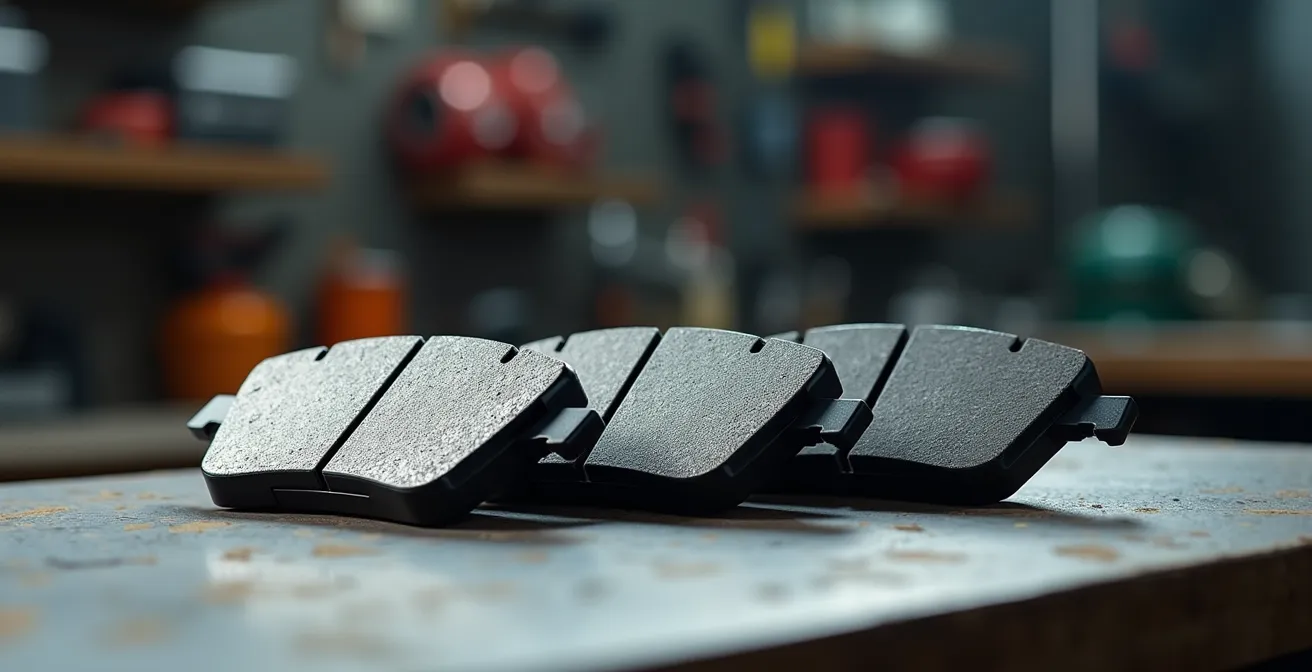
This image illustrates how different materials are suited for different demands, from daily driving to high-performance applications. The right choice enhances both safety and driving experience.
Ceramic pads represent the premium tier. They offer excellent stopping power, are extremely quiet, and produce very little dust. They also manage heat exceptionally well, making them resistant to brake fade during aggressive driving. Their primary downside is cost. While an OEM pad is designed as a perfect compromise for the average driver of that vehicle, choosing a premium aftermarket ceramic pad can be a genuine upgrade if your priorities are quiet operation and clean wheels. Conversely, if you tow a trailer, a heavy-duty semi-metallic pad might be a better choice than the OEM organic pad.
Key Takeaways
- Prioritize OEM for all critical electronic sensors to avoid costly misdiagnoses and “cascading failures.”
- Use OEM or premium aftermarket parts for safety systems like brakes; the synergy between components is vital.
- Save money intelligently with high-quality, certified aftermarket parts for low-risk cosmetic components like body panels.
Structuring Preventive Maintenance to Reduce Downtime
Ultimately, the smartest way to manage repair costs is to move from a reactive to a proactive mindset. Structuring your approach to parts selection within a preventive maintenance framework allows you to make calm, informed decisions rather than panicked choices under the pressure of a broken-down vehicle. This is especially true given that a vast majority of repairs, nearly 77.5% according to industry data, are performed by professionals, meaning your primary role is directing the choice of parts.
A structured decision-making process helps remove emotion and focuses on logic. It forces you to consider the key variables for every single part: its role in safety, the vehicle’s warranty status, its age, and the availability of high-quality alternatives. This turns a complex decision into a simple, repeatable process.
The following matrix consolidates the core logic of this article into a simple, question-based tool. By working through these questions for any given repair, you can arrive at the most logical and cost-effective decision for your specific situation.
| Question | If Yes | If No |
|---|---|---|
| Is the part safety-critical (brakes, steering)? | Strongly consider OEM | Check next criteria |
| Is the part a complex electronic sensor? | Use OEM to avoid diagnostic errors | Check next criteria |
| Is the vehicle under factory warranty? | Use OEM to protect warranty | Consider aftermarket |
| Is the vehicle’s age >10 years? | Value aftermarket is acceptable | Premium aftermarket/OEM |
By adopting this risk-based framework, you transform from a passive consumer into an active manager of your vehicle’s health and your own finances. You are no longer just choosing parts; you are making strategic investments in your vehicle’s reliability and safety.
To apply this framework effectively, the next logical step is to discuss these options and your preferences with a trusted mechanic before a repair is needed, establishing a clear strategy for future maintenance.