
Every journey behind the wheel carries responsibility—not just for your own safety, but for every passenger, pedestrian, and fellow driver sharing the road. Safe driving isn’t simply about following rules; it’s a comprehensive skill set that combines technical knowledge, situational awareness, and the right mindset. Whether you’re a newly licensed driver or someone with decades of experience, understanding the fundamental principles of road safety can mean the difference between arriving safely and facing a preventable incident.
The modern driving environment presents unique challenges that previous generations never encountered. From increasingly complex vehicle technologies to distracted driving epidemic and evolving road infrastructure, today’s drivers must navigate a landscape that demands constant adaptation. This article explores the core pillars of safe driving—defensive techniques, vehicle safety systems, environmental adaptation, hazard recognition, and emergency preparedness—providing you with actionable knowledge to become a more confident and safer driver in any situation.
Defensive driving transforms you from a passive road user into an active safety participant. This proactive approach assumes that hazards can emerge from anywhere at any moment, preparing you to respond effectively rather than simply react.
Think of your vehicle as existing within an invisible bubble of safety. Maintaining adequate space on all sides—front, rear, and lateral—gives you precious seconds to respond when the unexpected occurs. The three-second rule for following distance serves as a baseline: choose a fixed object ahead, and ensure at least three seconds pass between when the vehicle ahead passes it and when you do. In adverse conditions like rain or fog, extend this to five or six seconds. Similarly, avoid lingering in other drivers’ blind spots, and position yourself where you have multiple escape routes if traffic suddenly shifts.
Professional drivers constantly employ a systematic scanning pattern, checking mirrors every 5-8 seconds and looking 12-15 seconds ahead on city streets, or 20-30 seconds on highways. This forward-thinking vision allows you to anticipate problems before they reach you. Watch for “visual clues” that signal potential hazards:
Experienced defensive drivers develop an intuition for reading traffic patterns. A vehicle drifting within its lane might signal a distracted or impaired driver. Someone accelerating toward a yellow light will likely proceed through the intersection even after it turns red. By anticipating these behaviors rather than assuming compliance with traffic laws, you position yourself to avoid conflicts before they develop into collisions.
Your vehicle serves as your primary safety equipment, combining both passive protection systems and active technologies designed to prevent accidents altogether. Understanding and maintaining these systems maximizes your protection on every journey.
Contemporary vehicles incorporate sophisticated systems that actively assist in accident prevention. Anti-lock Braking Systems (ABS) prevent wheel lockup during emergency stops, maintaining steering control when you need it most. Electronic Stability Control (ESC) detects and reduces loss of traction, automatically applying individual brakes to help keep your vehicle on its intended path. More advanced features include:
While these technologies provide valuable assistance, they’re supplements to attentive driving, not substitutes. Always remain engaged and ready to take control.
Even the most advanced safety features become ineffective when basic maintenance is neglected. Your tires represent the only contact between your vehicle and the road—checking tread depth monthly using the penny test (inserting a penny into the tread with Lincoln’s head upside down; if you see the top of his head, it’s time for replacement) ensures adequate grip. Maintaining proper tire pressure, found on a sticker inside your driver’s door, optimizes both safety and fuel efficiency.
Brake system integrity is equally vital. Listen for unusual noises like grinding or squealing, feel for vibrations during braking, and watch for warning lights on your dashboard. Similarly, ensure all lighting systems function properly—headlights, taillights, brake lights, and turn signals—as they communicate your intentions to other drivers, especially in low-visibility conditions.
Road conditions change dramatically based on weather, time of day, and environment. Adapting your driving style to match these variables is essential for maintaining safety margins.
Rain creates hydroplaning risk when water builds between your tires and the pavement, causing complete loss of traction. This typically occurs at speeds above 35 mph on wet surfaces. Reduce speed, avoid sudden steering inputs, and if hydroplaning occurs, ease off the accelerator without braking and steer straight until traction returns. In fog, use low-beam headlights (high beams reflect off moisture and reduce visibility) and increase following distance substantially, as depth perception becomes unreliable.
Snow and ice demand even greater caution. Accelerate and decelerate gradually to avoid wheel spin or lockup. When approaching intersections, begin braking much earlier than usual, testing your traction gently. If you begin to skid, steer in the direction you want the front of the vehicle to go and avoid slamming the brakes, which can worsen the slide.
Night driving introduces significant challenges, as 90% of driving decisions rely on visual information, yet nighttime reduces visibility by up to 95%. Ensure headlights are properly aimed and clean, reduce speed to match your effective visual range, and avoid looking directly at oncoming headlights, which temporarily impairs your night vision. The hours between midnight and 6 a.m. present the highest risk due to reduced visibility, fatigue, and higher likelihood of encountering impaired drivers.
Highway driving emphasizes maintaining consistent speed, using merge lanes to match traffic flow, and positioning yourself away from large vehicle clusters. Urban driving requires constant vigilance for pedestrians, cyclists, delivery vehicles making sudden stops, and frequent intersection navigation. Adjust your mental alertness level and scanning pattern to match the environment’s complexity.
Certain hazards appear consistently across driving scenarios. Recognizing and preparing for these common threats dramatically reduces your accident risk.
Distracted driving has emerged as a leading cause of preventable accidents, with activities like texting increasing crash risk by 23 times. The solution is straightforward but requires discipline: silence or stow your phone before driving, preset navigation and climate controls, and pull over safely if something requires your attention. Remember that even hands-free conversations reduce your awareness—your brain can’t fully process both complex conversation and dynamic traffic situations simultaneously.
Aggressive drivers create unpredictable hazards. If someone tailgates you, change lanes when safe to let them pass rather than engaging in speed competitions. Never respond to aggressive gestures or provocations, as road rage incidents can escalate dangerously. Your ego is never worth your safety.
Intersections account for a disproportionate share of collisions. Before proceeding on a green light, take a brief moment to verify cross-traffic has actually stopped—the “look left, look right, look left again” approach. When making left turns across oncoming traffic, wait for a clear gap rather than forcing your way through marginal openings. The few seconds saved aren’t worth the collision risk.
Driver fatigue impairs judgment and reaction time as severely as alcohol impairment. If you notice yourself yawning repeatedly, drifting from your lane, or missing exits, find a safe place to rest immediately. Rolling down windows or turning up music provides only temporary alertness—actual rest is the only effective countermeasure.
Despite best efforts, emergencies sometimes occur. Preparation and knowledge transform these situations from disasters into manageable incidents.
If a tire blows out, resist the instinct to brake hard. Instead, grip the steering wheel firmly, ease off the accelerator, and allow the vehicle to slow naturally while steering straight. Once speed decreases significantly, steer gradually toward the shoulder. For brake failure, pump the brake pedal rapidly to build pressure. If that fails, shift to a lower gear and use the emergency brake gradually while steering toward a safe stopping area.
Every vehicle should contain an emergency kit including:
If you’re involved in a collision, move to safety if possible, call emergency services, exchange information with other parties, and document the scene with photos. Never admit fault at the scene—provide factual information to authorities and let insurance companies determine liability.
Safe driving represents an ongoing commitment to learning, awareness, and responsibility. The techniques and knowledge outlined here form a foundation, but true mastery comes from consistent practice and continuous adaptation to new challenges. Every journey offers an opportunity to refine your skills, sharpen your awareness, and reinforce habits that protect you and everyone sharing the road. By prioritizing safety in every decision behind the wheel, you contribute to a safer transportation environment for entire communities.

The key to mastering future automotive regulations isn’t reacting faster, but building a predictive operational framework that anticipates compliance needs. Leverage digital twins and predictive analytics to manage recalls and cybersecurity risks before they escalate. Use a “delta analysis” methodology…
Read more
Contrary to what your eyes may tell you, a modern car that crumples in a crash is not weak—it’s performing its most critical function perfectly. Engineered ‘crumple zones’ are designed to intentionally absorb and dissipate deadly kinetic energy away from…
Read more
True road survival is not about following traffic laws, but mastering a mental discipline that lets you anticipate and neutralize the mistakes of other drivers before they happen. Proactive driving involves actively scanning 12-15 seconds ahead and running constant ‘what-if’…
Read more
An Out-of-Service (OOS) violation is more than a roadside inconvenience; it’s a critical failure in a fleet’s safety and compliance system. This guide moves beyond reactive checklists to establish a proactive, systemic defense against OOS violations. By focusing on the…
Read more
For drivers with limited neck mobility or in large vehicles, safely changing lanes is not about trying to look harder; it’s about building a robust, personalized safety system. Calibrate your mirrors using the BGE method to create a seamless panoramic…
Read more
When a driver’s attention fails, Autonomous Emergency Braking (AEB) isn’t just a feature; it’s a digital co-pilot executing a life-saving maneuver in fractions of a second. AEB systems operate on a “sense-decide-act” loop that is vastly faster and more reliable…
Read more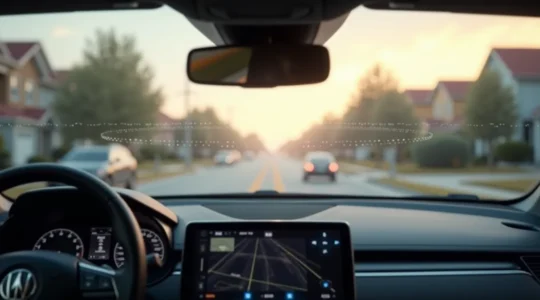
Investing in an ADAS package isn’t a simple discount; it’s an actuarial trade-off where higher repair costs can negate initial premium savings. Advanced Driver-Assistance Systems (ADAS) can increase repair bills by over 37%, offsetting the insurance discount you might receive….
Read more
The key to conquering commuter fatigue isn’t just turning on Adaptive Cruise Control (ACC); it’s mastering it as a tool for managing your finite mental energy. ACC excels at handling repetitive speed adjustments, but it has critical detection limits you…
Read more
The common advice for mountain driving—”use a lower gear”—is dangerously incomplete; true safety comes from understanding your vehicle’s entire braking system as an energy management tool. Brake failure is rarely sudden; it’s a predictable result of heat overwhelming system components…
Read more
In summary: The highway shoulder is a statistically proven danger zone; your first priority is to make your vehicle hyper-visible. Follow a “Stay or Go” decision framework: exit the vehicle only if it is clearly unsafe or you can reach…
Read more